
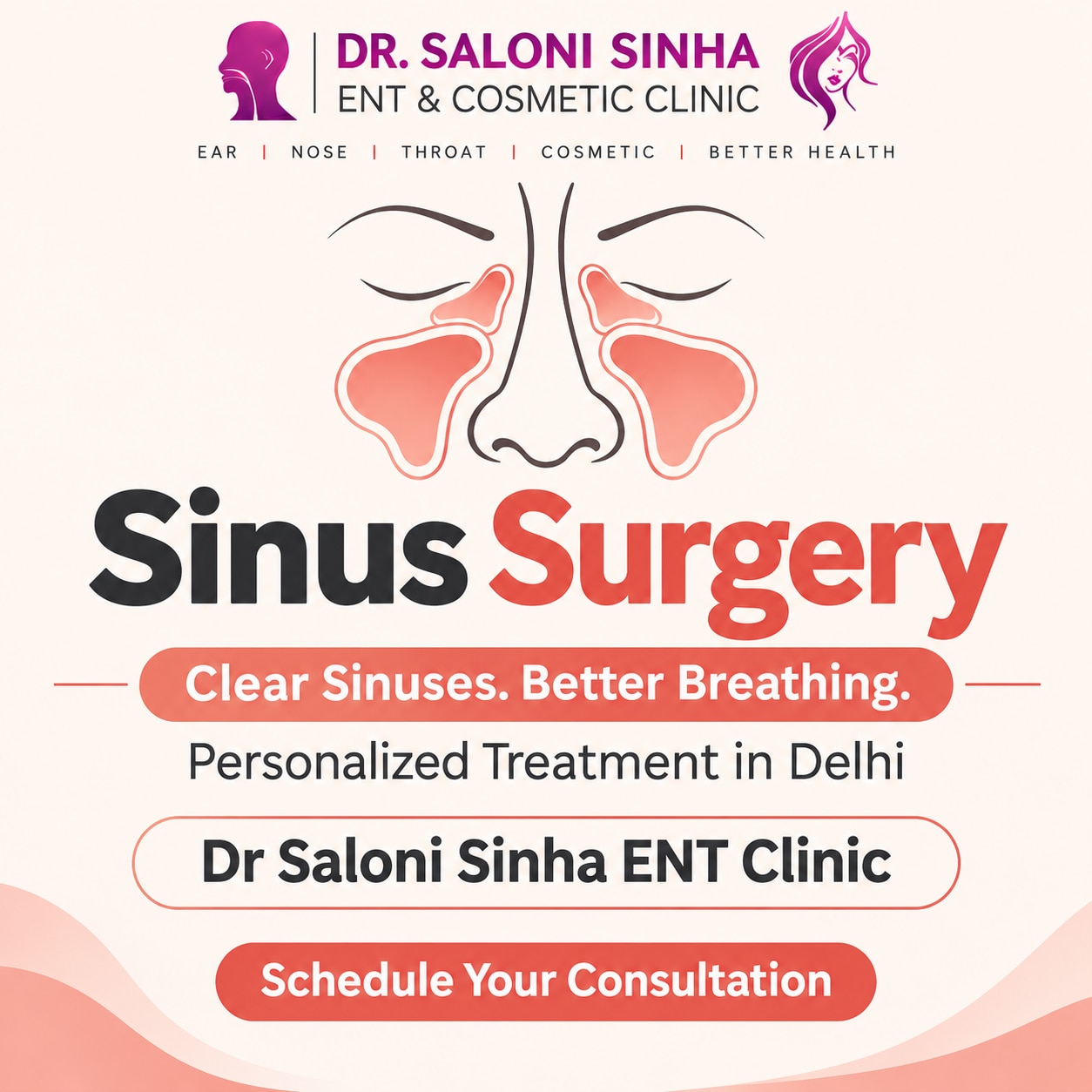
Sinus Surgery in Delhi is a topic of interest for individuals experiencing persistent nasal blockage, recurring sinus infections, facial pressure and symptoms associated with chronic rhinosinusitis. Sinus surgery is a medical procedure that may be considered when an individual's sinus condition does not respond adequately to appropriate medical management or when specific structural or disease-related problems require surgical treatment.
Understanding the causes of sinus problems, available treatment options and the role of surgery can help individuals make informed decisions about their healthcare.
What Is Sinusitis?
Sinusitis refers to inflammation of the tissue lining the paranasal sinuses. These are air-filled spaces located around the nose, cheeks, forehead and between the eyes.
Inflammation can interfere with normal mucus drainage and cause symptoms such as:
Persistent nasal congestion
Facial pressure or discomfort
Thick nasal discharge
Reduced sense of smell
Difficulty breathing through the nose
Postnasal drip
Headache or facial heaviness
Chronic rhinosinusitis generally refers to sinus inflammation lasting 12 weeks or longer. Its causes may include nasal polyps, allergies, anatomical variations and other inflammatory conditions.
When Is Sinus Surgery Considered?
Sinus surgery is not necessary for every person experiencing sinusitis. Many cases can be managed through medical treatment and appropriate follow-up.
Surgical treatment may be considered in selected cases involving:
Chronic rhinosinusitis with persistent symptoms
Nasal polyps associated with sinus inflammation
Recurrent sinus problems with relevant clinical findings
Fungal sinus disease
Structural obstruction affecting sinus drainage
Selected sinus conditions that require surgical intervention
The decision depends on the confirmed diagnosis, disease characteristics, previous treatment, quality of life and expected benefits compared with non-surgical management.
What Is Functional Endoscopic Sinus Surgery (FESS)?
Functional Endoscopic Sinus Surgery, commonly called FESS, is a procedure used to address selected diseases affecting the paranasal sinuses.
During the procedure, an endoscope is introduced through the nostril to provide a view of the nasal passages and sinus openings. Specialised instruments may be used to remove diseased tissue, address nasal polyps or improve sinus drainage pathways, depending on the condition.
The surgical approach is determined by the location and extent of the disease.
How Is Sinus Disease Evaluated Before Surgery?
A clinical assessment may involve:
Medical history: Understanding the duration, frequency and nature of symptoms.
Nasal examination: Assessing the nasal passages and identifying possible structural abnormalities.
Nasal endoscopy: Examining internal nasal structures and relevant sinus openings.
CT scan: Providing detailed information about sinus anatomy and disease extent when surgery is being considered.
Review of previous treatment: Evaluating medications, previous procedures and response to treatment.
Not every patient requires surgery or every available diagnostic investigation.
Is Sinus Surgery Suitable for Everyone?
No. Surgical suitability depends on individual clinical findings. Some symptoms associated with sinus conditions can also occur with migraine, allergies and other nasal disorders.
A proper diagnosis is important before considering an operation. The potential benefits, limitations, complications and possibility of continued medical management should be discussed as part of informed decision-making.
Conclusion
Sinus surgery is one of the treatment options available for selected cases of chronic and complicated sinus disease. Understanding the underlying condition, diagnostic process and available medical and surgical approaches is essential when considering treatment.
Medical decisions should be based on individual assessment, established clinical evidence and an informed discussion of potential benefits and risks.
Medical information disclaimer: This article is intended for general educational purposes and does not replace individual medical evaluation or professional healthcare advice.